Today's stories traverse centuries of Sikh history, from the end of an empire to the affirmation of a sacred tradition. They speak of loss, identity, and the unyielding spirit that defines the Sikh path.

These events, though separated by time, are connected by a common thread of sovereignty and perseverance. They remind us how the past continues to shape the present, from personal lives to political rights.


👑 1893 — The Last King's Farewell

Maharaja Duleep Singh, the last sovereign of the Sikh Empire, passed away alone in a Parisian hotel.


Sikh History - 1893

In a quiet Paris hotel room, a story that began with the roar of a lion ended in a whisper. Maharaja Duleep Singh, the final ruler of the mighty Sikh Empire founded by his father, Maharaja Ranjit Singh, died in exile, far from the land he was born to rule.

Separated from his mother, Maharani Jind Kaur, at a young age, Duleep Singh was taken to England and raised as a British aristocrat. Though he lived a life of luxury, he was a king without a kingdom. He spent his later years trying to reclaim his heritage and sovereignty, a struggle that ultimately broke his health and spirit.

His life is a powerful and tragic symbol of the fall of the Sikh Empire and the immense personal cost of colonialism. It serves as a poignant reminder of lost sovereignty and the enduring fight to preserve one's identity against overwhelming pressure to assimilate.

Remembering the “Black Prince of Perthshire” prompts us to reflect on what it means to be connected to one's roots, even when forcibly uprooted.


📜 1909 — The Sikh 'I Do' Becomes Law

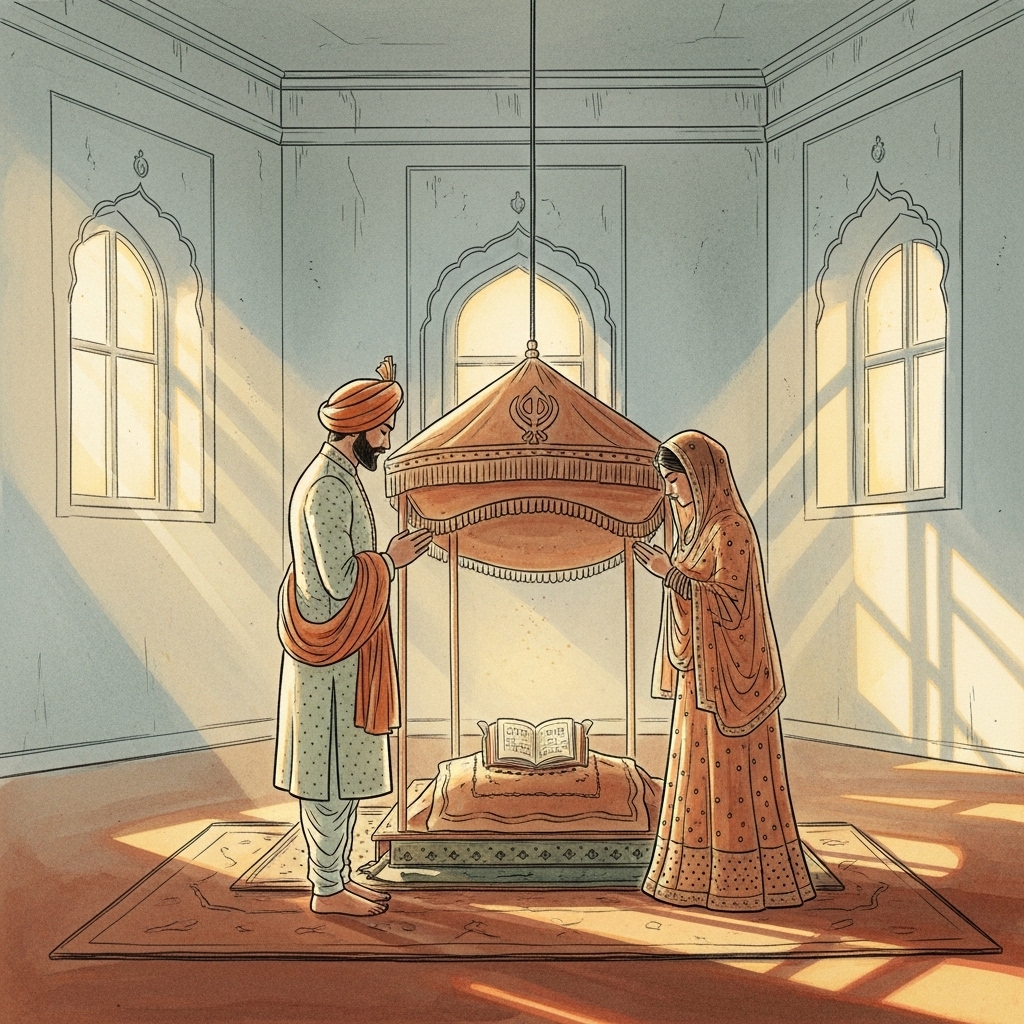
The Anand Marriage Act was officially passed, giving legal recognition to the Sikh wedding ceremony.


Sikh History - 1909

For centuries, Sikhs had consecrated marriages through the Anand Karaj (Ceremony of Bliss), a beautiful rite distinct from other traditions. However, legally, it wasn't officially recognized, forcing Sikhs to register their unions under Hindu laws.

After a long and persistent campaign by Sikh leaders and reform movements like the Singh Sabha, the British Indian government passed the Anand Marriage Act. This landmark legislation gave the Anand Karaj its own legal standing, affirming Sikhism as a distinct faith with its own unique customs and ceremonies.

This was more than just a piece of paper; it was a monumental victory for Sikh identity. It empowered the community to practice its faith freely and have its most sacred social institution recognized by the state, strengthening the Panth (Sikh collective) for generations to come.

This act reminds us that the fight for recognition, both cultural and legal, is a cornerstone of a community's strength and autonomy.


⚔️ 1710 — The Great Escape from Lohgarh

Banda Singh Bahadur, the legendary Sikh general, executed a daring escape from a massive Mughal siege.


Sikh History - 1710

How do you escape when the Emperor himself has you surrounded? This was the challenge facing Banda Singh Bahadur at the fort of Lohgarh, as Mughal Emperor Bahadur Shah laid siege with an army of 60,000.

The odds were impossible, but the Khalsa's spirit was not easily broken. In a brilliant display of strategy and sacrifice, a Sikh named Gulab Singh dressed in Banda Singh's armor to impersonate him, drawing the enemy's attention. This clever ruse allowed the real Banda Singh Bahadur to slip through the Mughal lines under the cover of darkness and continue his campaign for sovereignty.

This event is a masterclass in guerrilla tactics and a testament to the deep loyalty within the Khalsa forces. It showed the Mughals that the Sikh spirit was not confined by fortress walls and that victory requires more than just superior numbers; it requires courage and wit.

Banda Singh's escape from Lohgarh teaches us that even in the most hopeless situations, a clever plan and a united purpose can create a path to freedom.


🏛️ 1987 — A Sacred Assembly Halted

The Indian government intervened to stop a Sarbat Khalsa from being held at the Akal Takht.


Sikh History - 1987

The Sarbat Khalsa (assembly of the entire Sikh commonwealth) is a historic institution for collective decision-making, convened at the Akal Takht in times of great importance. In the turbulent political climate of 1980s Punjab, Sikh leaders called for such an assembly.

However, the Indian government, viewing the gathering as a potential threat to state security, took measures to prevent it. Security forces were deployed, and access to the Golden Temple complex was restricted, effectively halting the traditional Sikh democratic process before it could begin.

This event highlighted the ongoing friction between the Sikh community's desire for self-governance and the authority of the central government. It raised critical questions about religious freedom and the right of a community to assemble according to its historical traditions.

The halt of the Sarbat Khalsa serves as a modern reminder of the delicate balance between state power and the sovereignty of religious institutions.

🕯️ Sent with care — Subah Di Cha

Keep Reading

No posts found